
The Collective Bench
151 Years of Combined Knowledge in a Single Laboratory
There is a moment in every well-run dental laboratory that doesn't appear on any time sheet. A senior technician pauses at their bench, walks over to a colleague, and looks down at a case that's giving them trouble. Twenty seconds of quiet study. A finger pointed at the margin. A short, plain-English suggestion. Then back to work.
That moment is worth more than any single piece of equipment in the building. And it is the single hardest thing for a competitor to replicate.
If you add up the years our team have spent at the bench, you arrive at something close to 151 years of combined dental laboratory experience. We don't quote that figure as a boast, we quote it because the maths matters. Knowledge in a laboratory compounds in a way that knowledge in most industries does not, and the longer a team works alongside each other, the more that compounding shows up in the finished work.
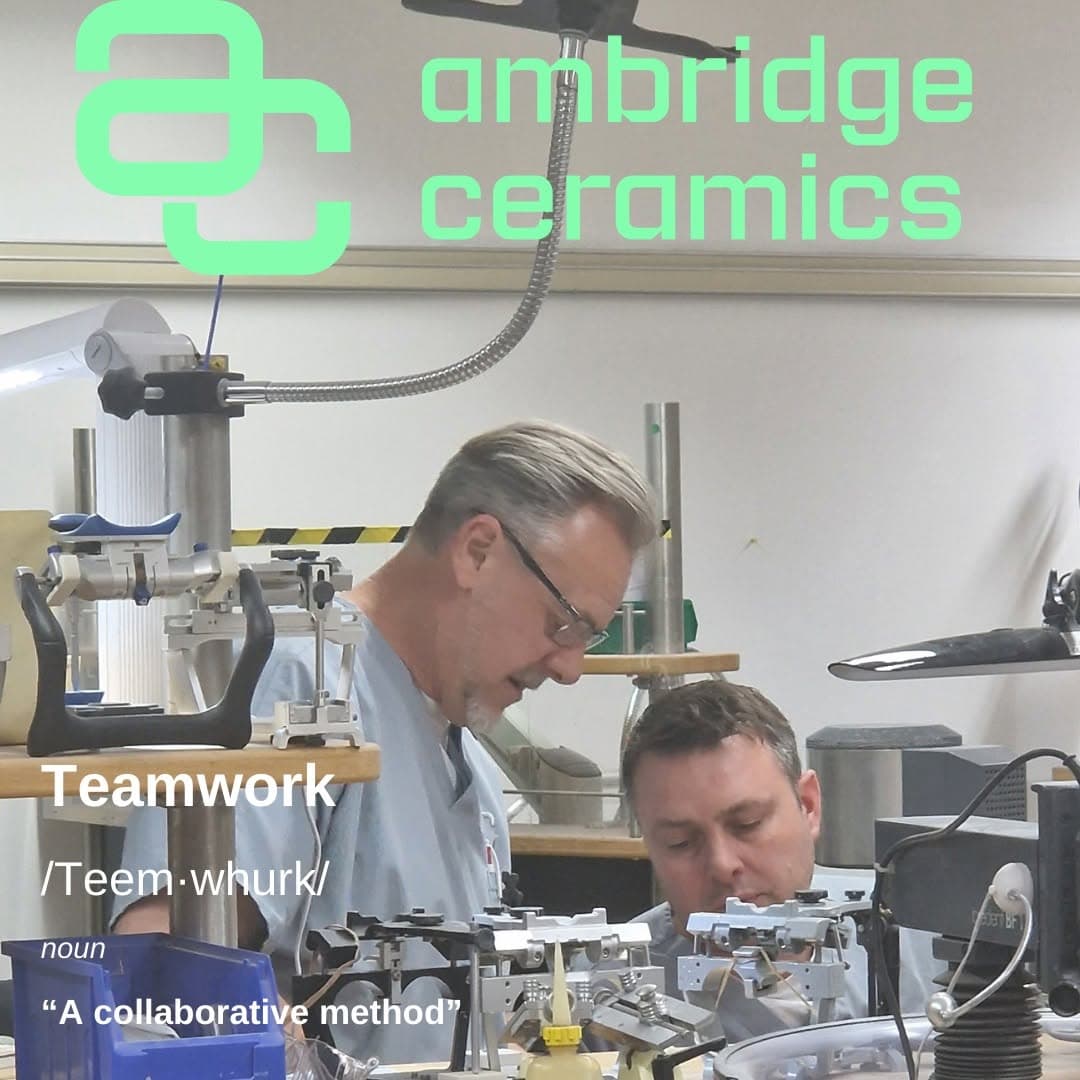
What Experience Teaches that Training Cannot (10,000hr expert)
Every dental technician learns the same fundamentals. Materials science, casting, waxing, occlusion, ceramic layering, finishing, the syllabus is broadly the same, and a competent technician can usually be trained to a respectable standard within five or six years. After that, something else takes over.
After ten years at the bench, a technician starts to recognise patterns, particular impression styles, particular preparation habits, particular shade challenges, and to know, before they begin, where a case is likely to go wrong.
After twenty years, they recognise those rare presentations: the unusual occlusal patterns, the historical restorations that have to be matched, the awkward edge cases that don't fit any textbook.
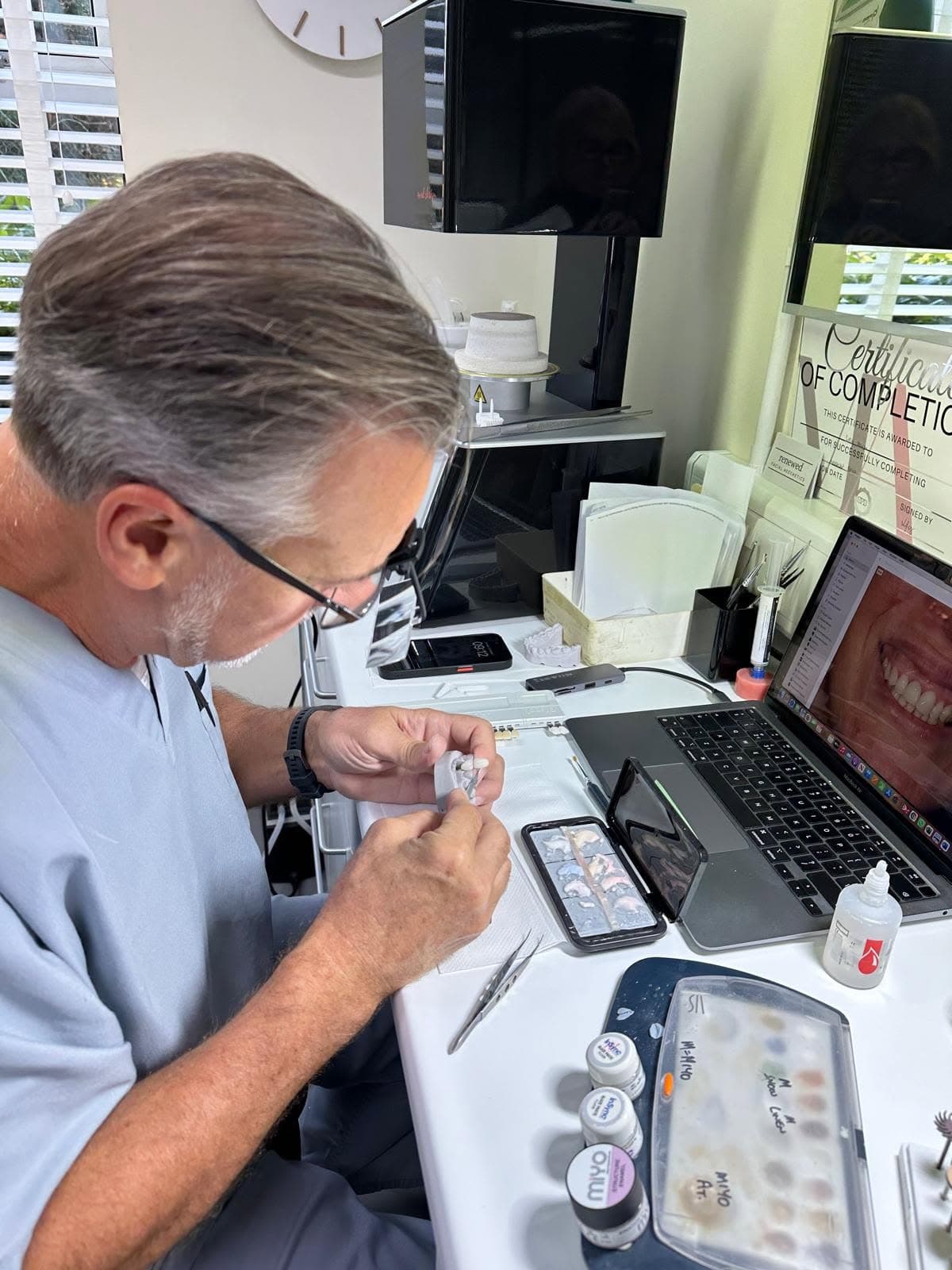
After thirty years, they are 'the textbook'
You cannot fast-track this. You can only put the years in.
Institutional Memory and Case Continuity
A dental laboratory that has worked with the same clinicians for many years carries something invaluable, continuity, we remember preferences. We know which dentists like a broad/tight contact or which prefer a flat occlusal table, which insist on a particular shade layering style, which practices struggle with certain types of impression material and which clinicians have a particular eye for surface characterisation.
For a practice that has used Ambridge Ceramics for ten, twenty or thirty years, that institutional memory is invisible until you try to do without it. We hold the history of the work, the patient cases, the preferences, the previous restorations that must be matched. When the same dentist sends us the same patient five years later for a neighbouring tooth, the file already contains everything we need to make the result seamless.
That kind of continuity is impossible in a high-turnover laboratory, and it is one of the strongest reasons our clinicians stay with us throughout their careers.
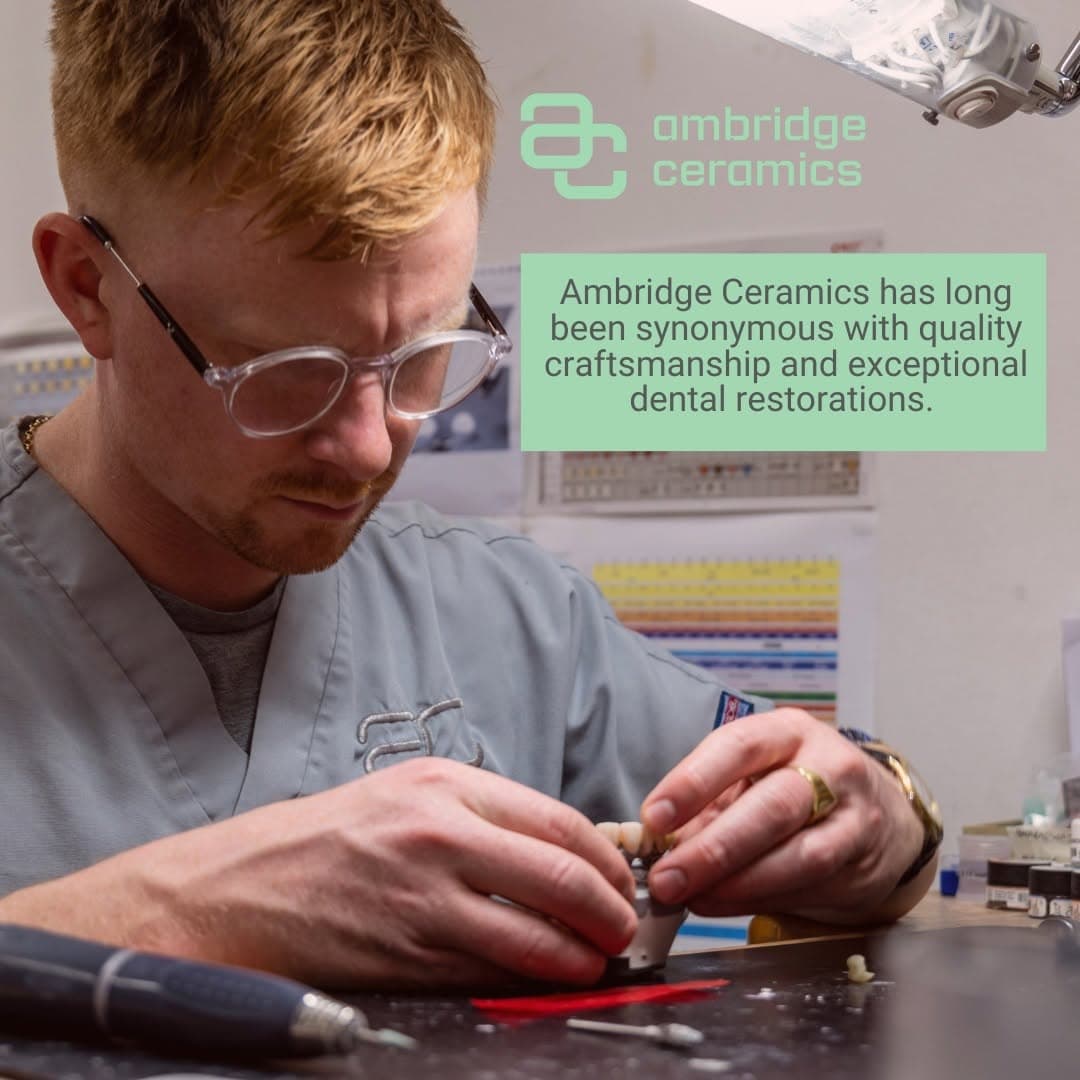
Mentoring as a Quality-Control Mechanism
In any industry, the best way to maintain standards is for experienced people to work alongside less experienced people every day. The dental laboratory is no different.
At Ambridge, our newest technicians learn at the elbow of colleagues who started before they were born. Cases are reviewed, finishes are critiqued, decisions are challenged. Nothing leaves the bench without being looked at by someone whose judgement has been tested across thousands of restorations.
This is not a formal hierarchy, it is simply how a properly run laboratory works. And it is the single most reliable way of ensuring that the standard never drifts.
What This Means for the Clinician
When you send a case to a laboratory, you are not really commissioning a piece of zirconia or a hand-layered crown. You are commissioning a decision, mostly a series of decisions, made by people you cannot see, about materials, design, finishing and presentation. The quality of those decisions is the quality of the restoration you receive.
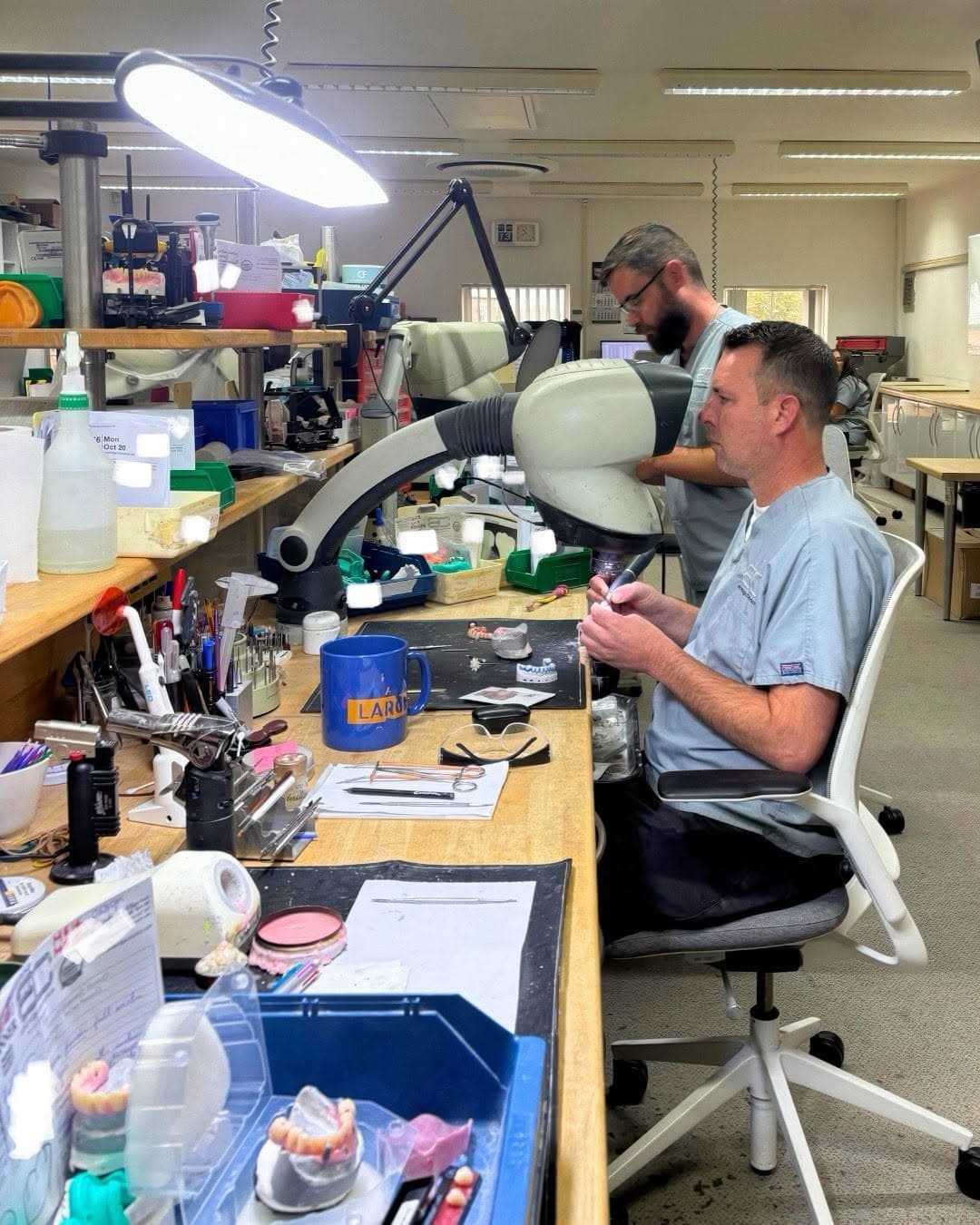
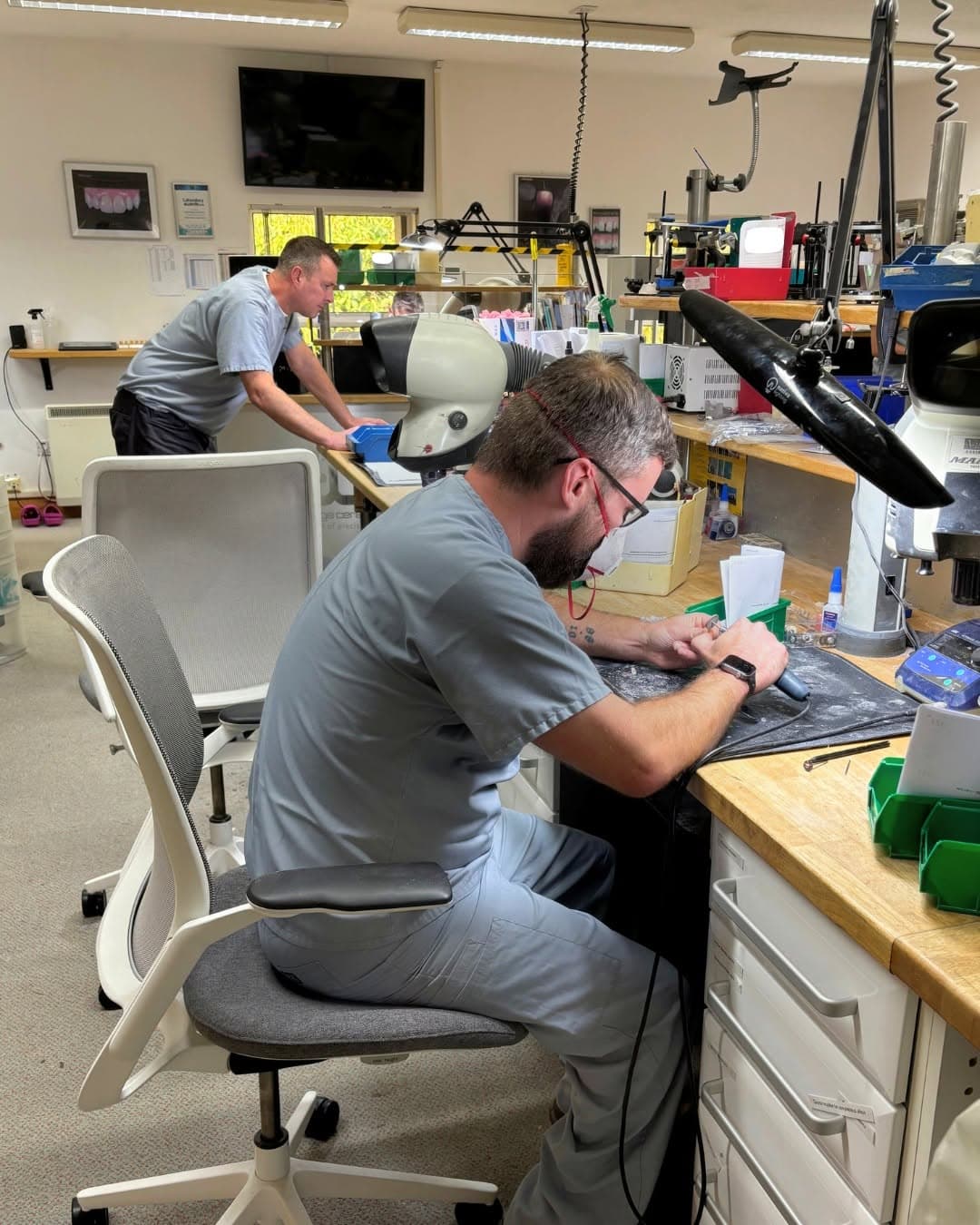
Combined experience means more correct decisions, more often, across more variations of case. It means fewer remakes, fewer chair-side adjustments, fewer awkward conversations with patients. It means the difference between a laboratory that produces work and a laboratory that produces results.
That is the quiet value of 151 years at the bench.
If you'd like to see how the combined experience of the Ambridge Ceramics team shows up in everyday case work, you're warmly invited to visit the laboratory in Ripon. Get in touch on 01765 607347 or info@ambridgeceramics.com and we'll arrange a time that suits.
“Excellence isn’t automated. It’s intentional.”
Talk a Case Through With Us
Have a case where the material choice is in question? Get in touch before work begins , we are always happy to discuss indications, options and anticipated outcomes.
Send a case →Ambridge Ceramics
A multi‑award‑winning UK dental laboratory based in Ripon, North Yorkshire.
Premier House, Kiln Court, College Rd, Ripon HG4 2BP, United Kingdom
- Digital accuracy supported by human expertise.
- Technician‑led decision‑making at every stage.
- Materials chosen for longevity, not convenience.
- Aesthetic outcomes guided by real‑world function.