
Graduated Density, Natural Flow
The Science Behind Fusion Zirconia
There is a phrase in dental ceramics that has worn itself thin through overuse: "multilayer zirconia." It appears on every supplier brochure, in every CAD course handout, in every conversation about modern restorative materials. The trouble is, the phrase has come to mean almost everything and therefore almost nothing. Before we go any further, it's worth being precise about what Fusion Zirconia actually is, and why we believe it represents a meaningful step forward.
Most zirconias are described as "multilayer," but natural teeth aren't built in layers , they grow in gradients.
That's why Fusion Zirconia isn't just a colour stack. It's a graduated density flow, engineered to replicate the way real dentine transitions from high-chroma depth to translucent enamel.
This is what gives natural teeth their vitality, their internal glow, and their ability to blend seamlessly under different lighting conditions. Fusion Zirconia follows the same rules.
A Material That Behaves Like a Tooth
- Dentine zone with higher density and chroma for internal warmth and strength.
- Smooth transition zone where chroma softens and translucency increases.
- Enamel zone with natural light transmission for lifelike incisal vitality.
- No harsh layer lines — just a continuous gradient, the way nature intended.
This isn't cosmetic trickery. It's material science designed to mimic biology.
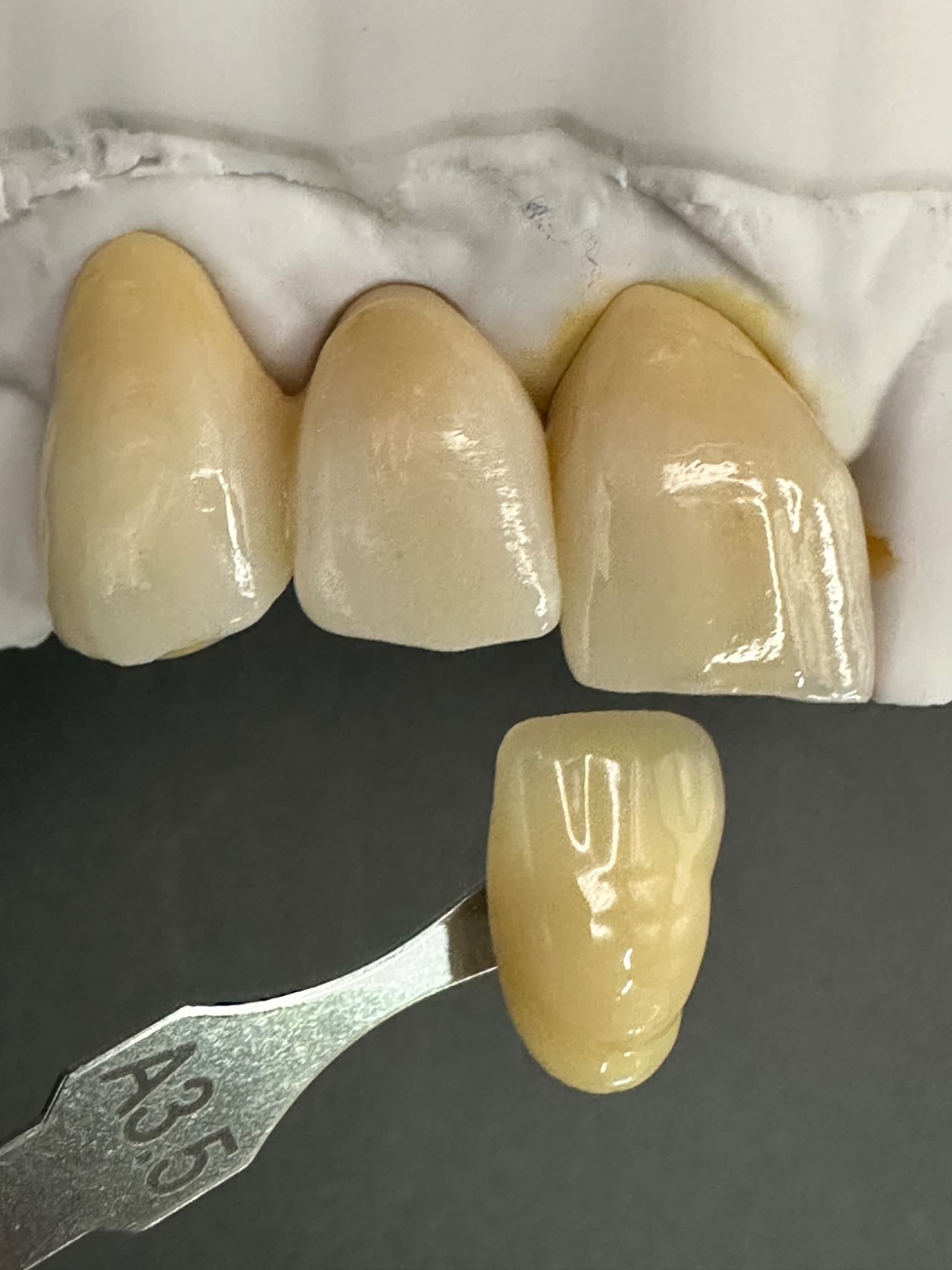
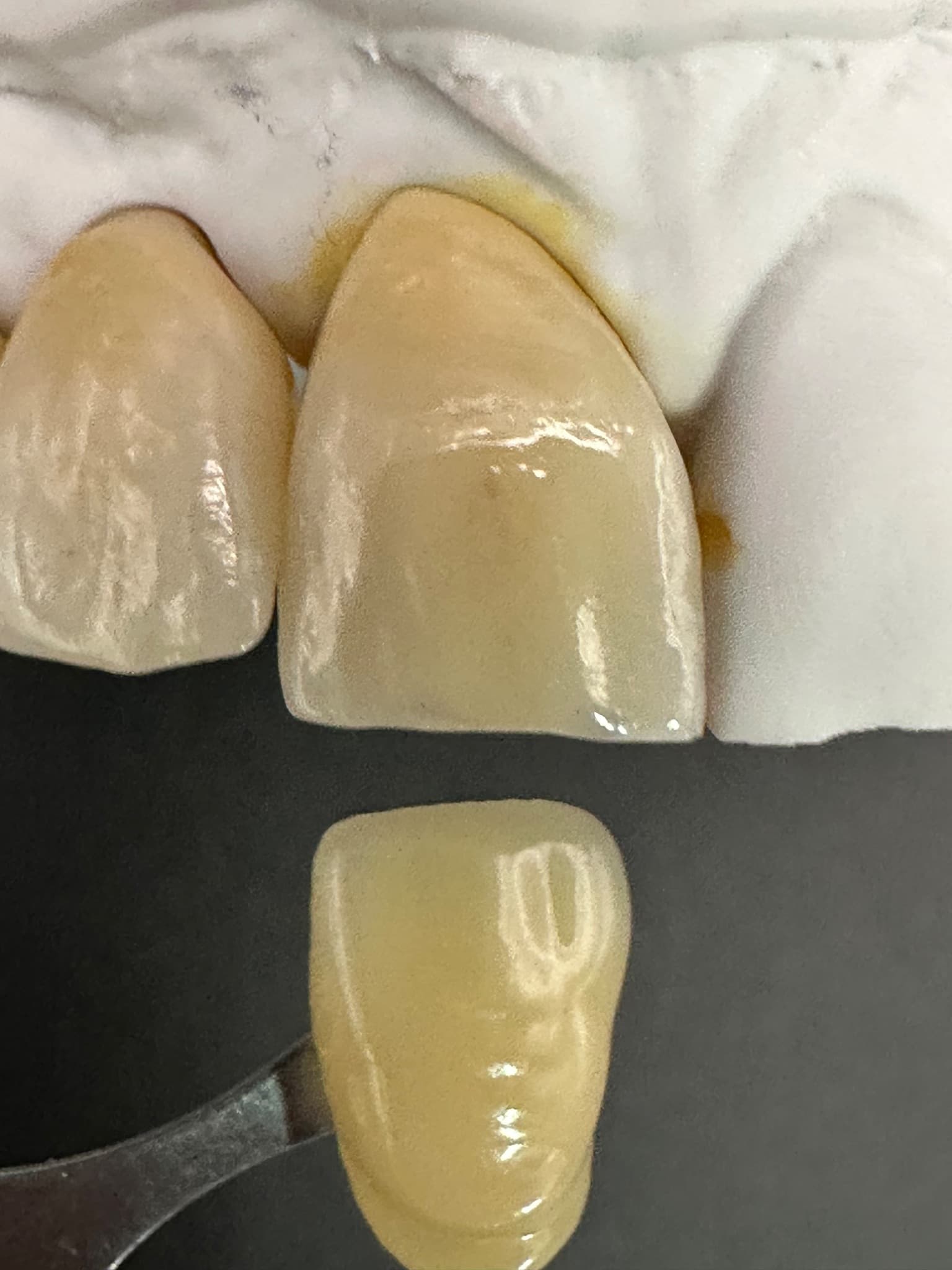
Images: UR2 milled higher in the puck than UR1 for more enamel translucency
Design Freedom Through Puck Positioning
Fusion Zirconia gives technicians a powerful advantage: the ability to raise or lower the design within the puck to fine-tune the aesthetic outcome.
Need more chroma for a mature dentition? Lower the design into the dentine zone. Need more translucency for youthful enamel? Raise the design into the incisal zone. Need to match a single central with complex internal character? Position the design precisely within the gradient to mirror the patient's natural tooth.
This level of control is what separates Fusion Zirconia from generic multilayers, and what allows us to achieve accurate shade matching even in demanding anterior cases.
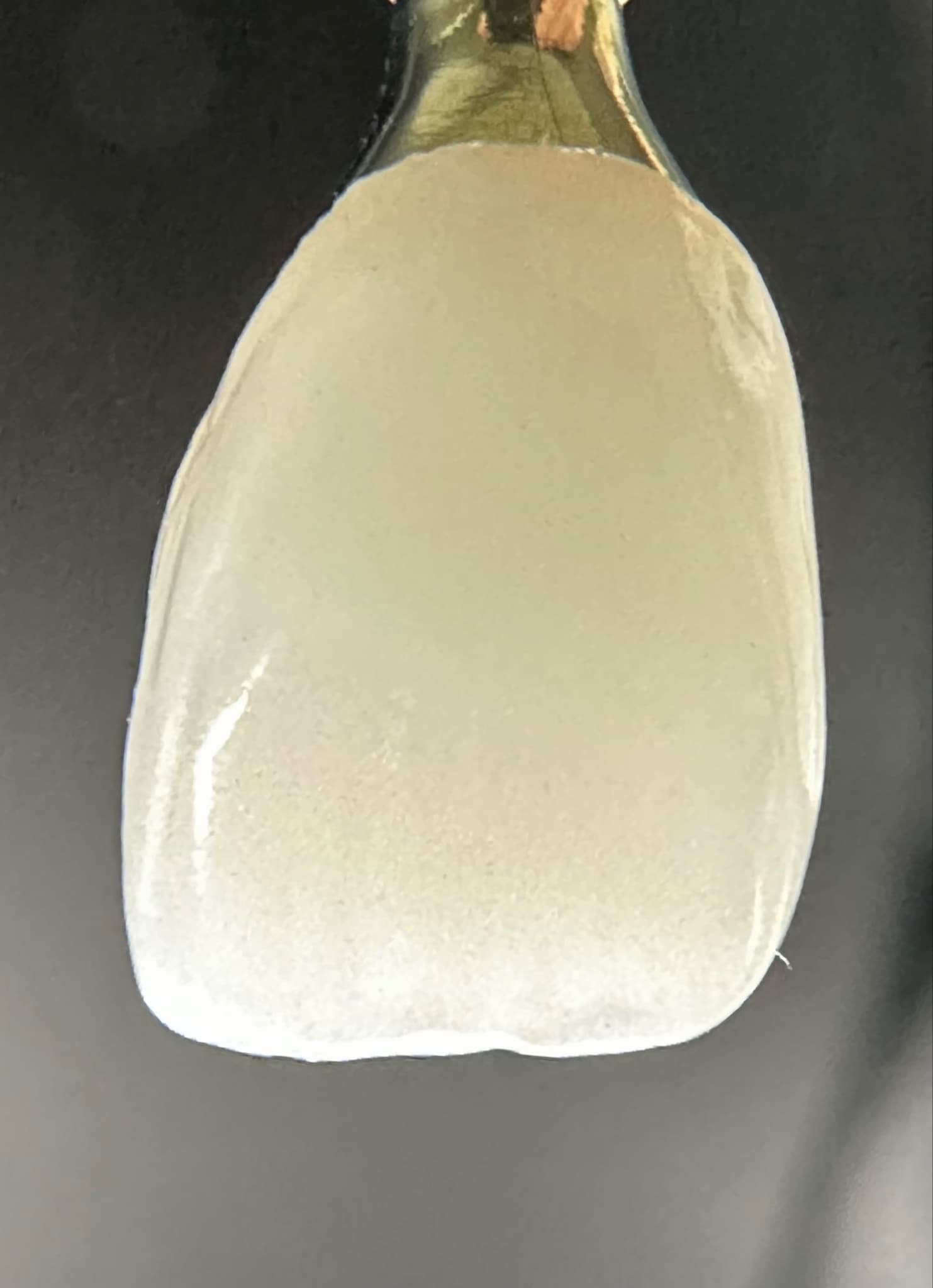
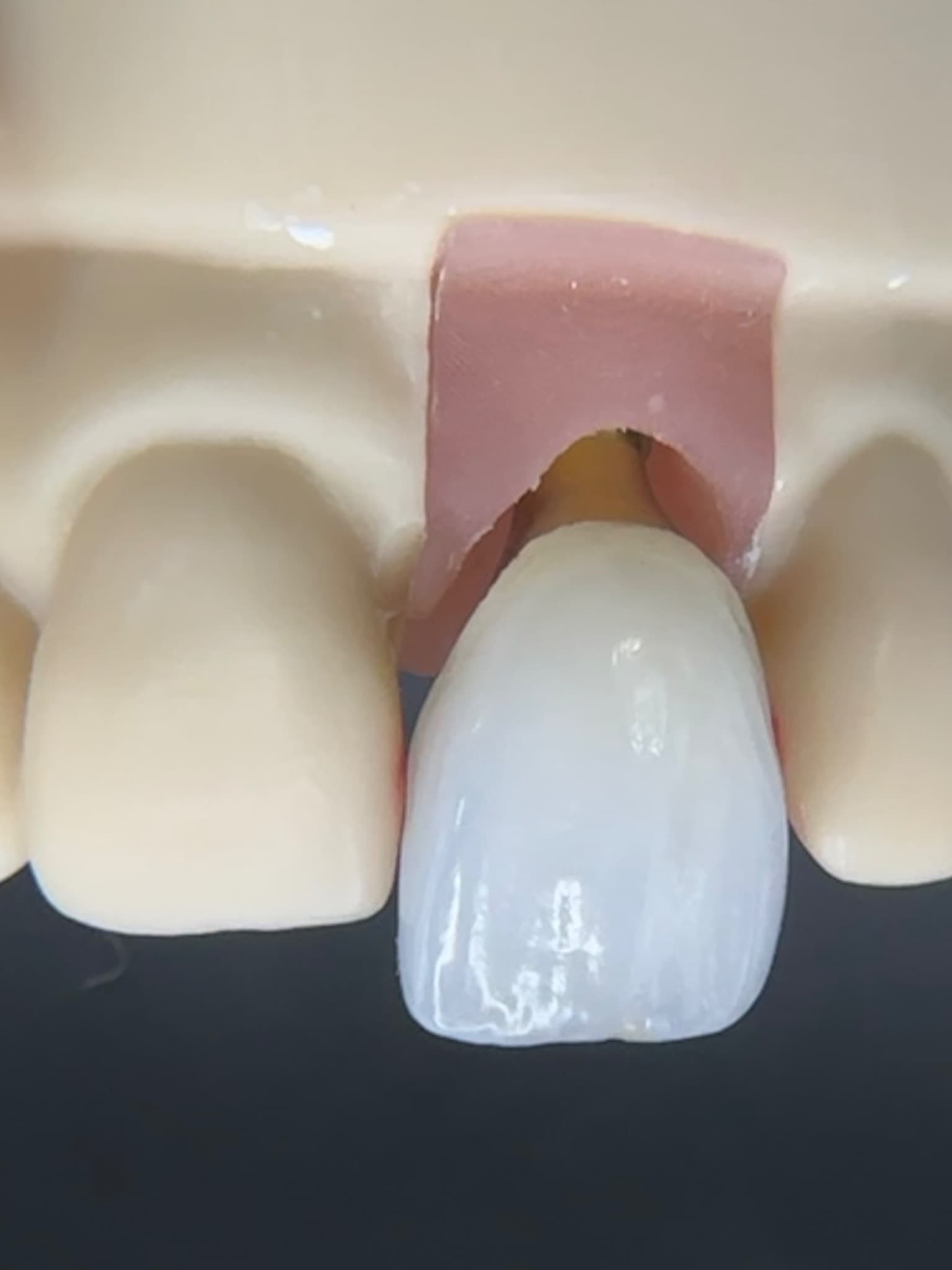
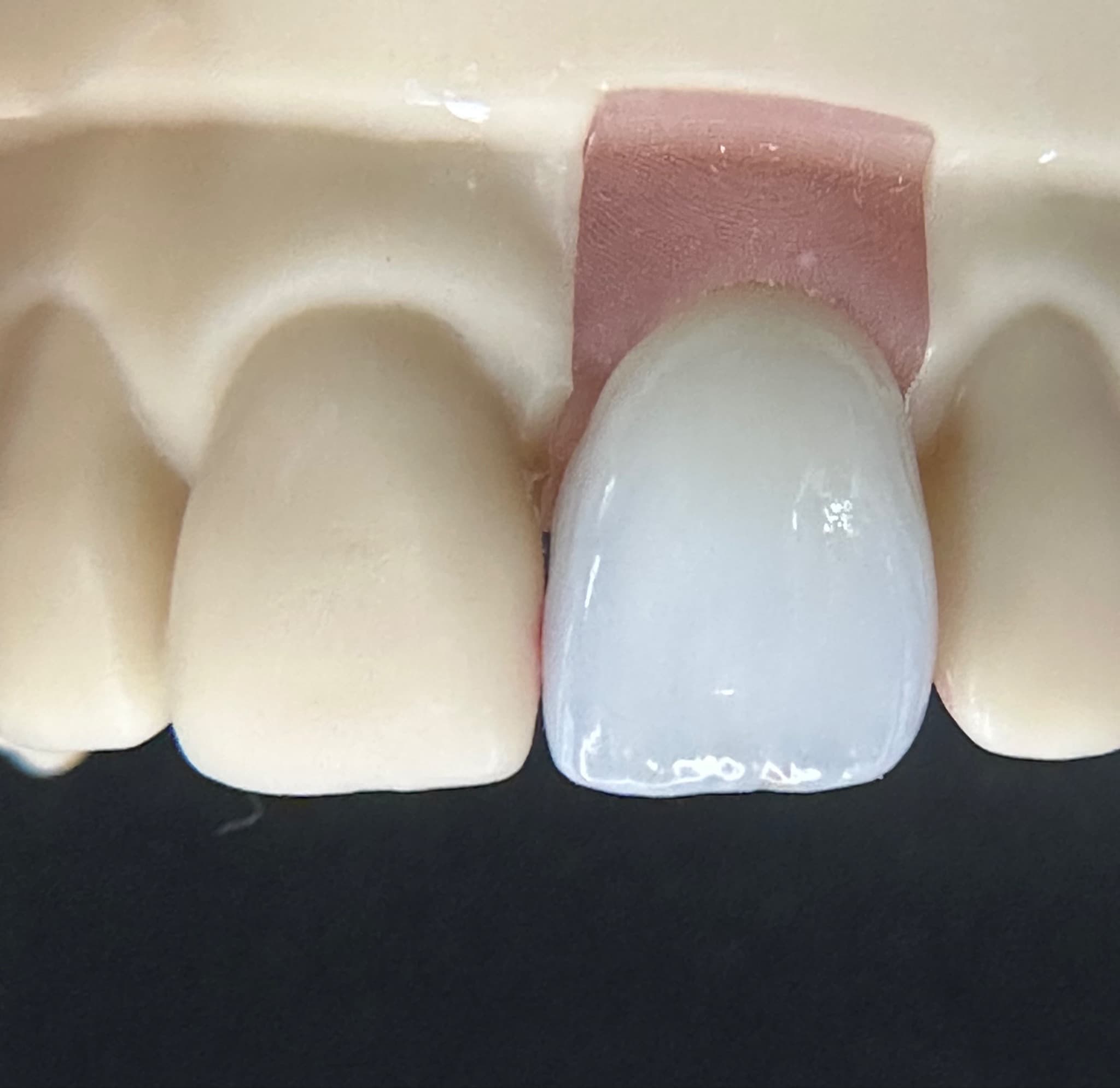
Images: 1, 2 & 3 show higher position in-puck-placed UL1 youthful implant crown maximising the translucency zone
Why This Matters Clinically
A restoration that mimics natural tooth structure doesn't just look better , it integrates better.
- More natural light behaviour.
- More predictable shade outcomes.
- Better blending with adjacent teeth.
- Stronger dentine-like core where it matters.
- Enamel-like translucency where it counts.
Fusion Zirconia isn't just a material. It's a tool for recreating nature with precision.
If you'd like to discuss how Fusion Zirconia might suit a particular case — anterior aesthetic, full-arch reconstruction, or a single-central rebuild — get in touch with Ambridge Ceramics on 01765 607347 or info@ambridgeceramics.com. We're always happy to talk through positioning, indication and expected outcome before a case is started.
“Excellence isn’t automated. It’s intentional.”
Talk a Case Through With Us
Have a case where the material choice is in question? Get in touch before work begins , we are always happy to discuss indications, options and anticipated outcomes.
Send a case →Ambridge Ceramics
A multi‑award‑winning UK dental laboratory based in Ripon, North Yorkshire.
Premier House, Kiln Court, College Rd, Ripon HG4 2BP, United Kingdom
- Digital accuracy supported by human expertise.
- Technician‑led decision‑making at every stage.
- Materials chosen for longevity, not convenience.
- Aesthetic outcomes guided by real‑world function.