
Screw‑mentable Implant Restorations
Zirconia & CAD/CAM Titanium Bases at the Sub-Mucosal Standard
Place a hundred implants well and you will still be judged on the hundred restorations that sit on top of them. In modern implant dentistry, few areas are as biologically sensitive , or as clinically decisive , as the sub-mucosal junction. This is the zone where the restoration meets the peri-implant soft tissues, and it plays a defining role in long-term implant success.
Among the most reliable solutions in this space are zirconia restorations bonded to CAD/CAM-milled titanium bases , often referred to (less formally) as "screwmentable" crowns or bridges.
Despite the casual nickname, these restorations demand a highly controlled workflow and a deep understanding of how materials behave at the tissue interface.
The Sub-Mucosal Junction: Where Success Is Decided
The biological seal formed between the peri-implant mucosa and the restoration surface is the primary defence against:
- Bacterial infiltration.
- Inflammatory breakdown.
- Early and late peri-implantitis.
Even the most precisely placed implant is vulnerable if this seal is compromised.
Zirconia and titanium are both celebrated for their biocompatibility, but they interact with soft tissue in different ways:
- Zirconia offers a micro-roughness that encourages epithelial and connective tissue adhesion.
- Titanium provides mechanical strength and precision but requires careful surface management to avoid plaque retention and to gain epithelial adhesion.
Where these two materials meet , the bonded interface , lies a critical biological and mechanical transition zone. If this junction is poorly finished, over-polished, under-polished or contaminated, the soft-tissue seal becomes unstable.
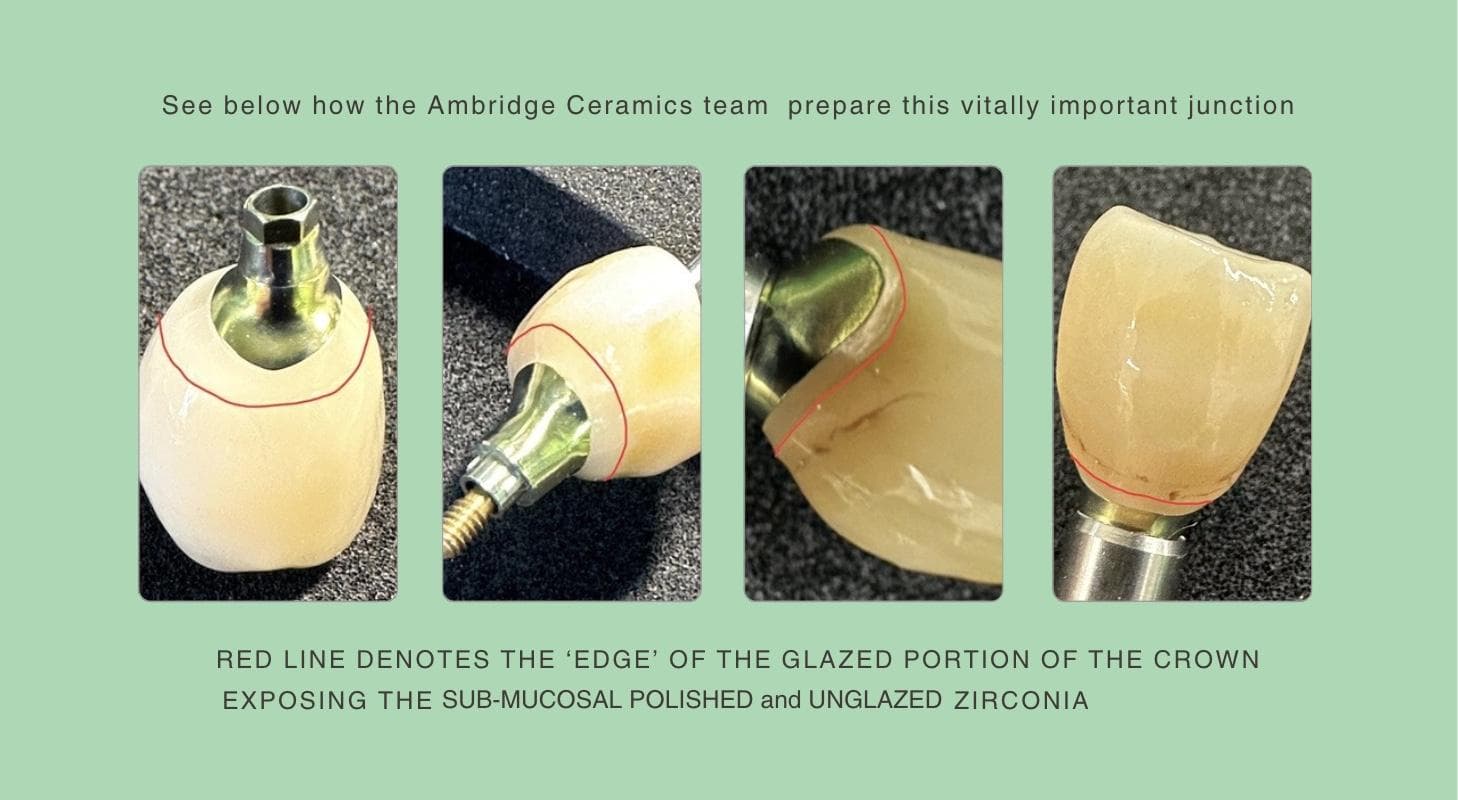
Clinical Advantages of Zirconia Restorations on CAD/CAM Titanium Bases
Why the screw-mentable hybrid remains a gold-standard solution.
Strength & Durability. The zirconia–titanium combination delivers exceptional mechanical stability. The titanium base provides a precise, rigid foundation, while the zirconia superstructure offers high fracture resistance , ideal for posterior load cases and long-span bridges.
Biocompatibility. Both materials are exceptionally well-tolerated by peri-implant tissues. Titanium's proven track record and zirconia's favourable soft-tissue response help promote long-term biological harmony around the restoration.
Aesthetics. Zirconia's tooth-like colour and translucency allow for highly natural results, particularly in the anterior zone. When bonded to a titanium base, it avoids the greying or shadowing sometimes associated with metal abutments.
Precision Fit. CAD/CAM manufacturing ensures a highly accurate interface between the titanium base and the zirconia restoration. This precision reduces micro-gaps, supports a stable biological seal, and helps minimise plaque retention at the critical sub-mucosal junction.
Retrievability. The screw-retained design allows the restoration to be removed easily for hygiene, maintenance or implant assessment , a major advantage over traditional cement-retained crowns, especially in complex or long-term cases.
The Ambridge Workflow: Engineering the Biological Seal
At Ambridge Ceramics, our screw-mentable restorations are engineered with a single priority: a stable, predictable, long-term biological seal.
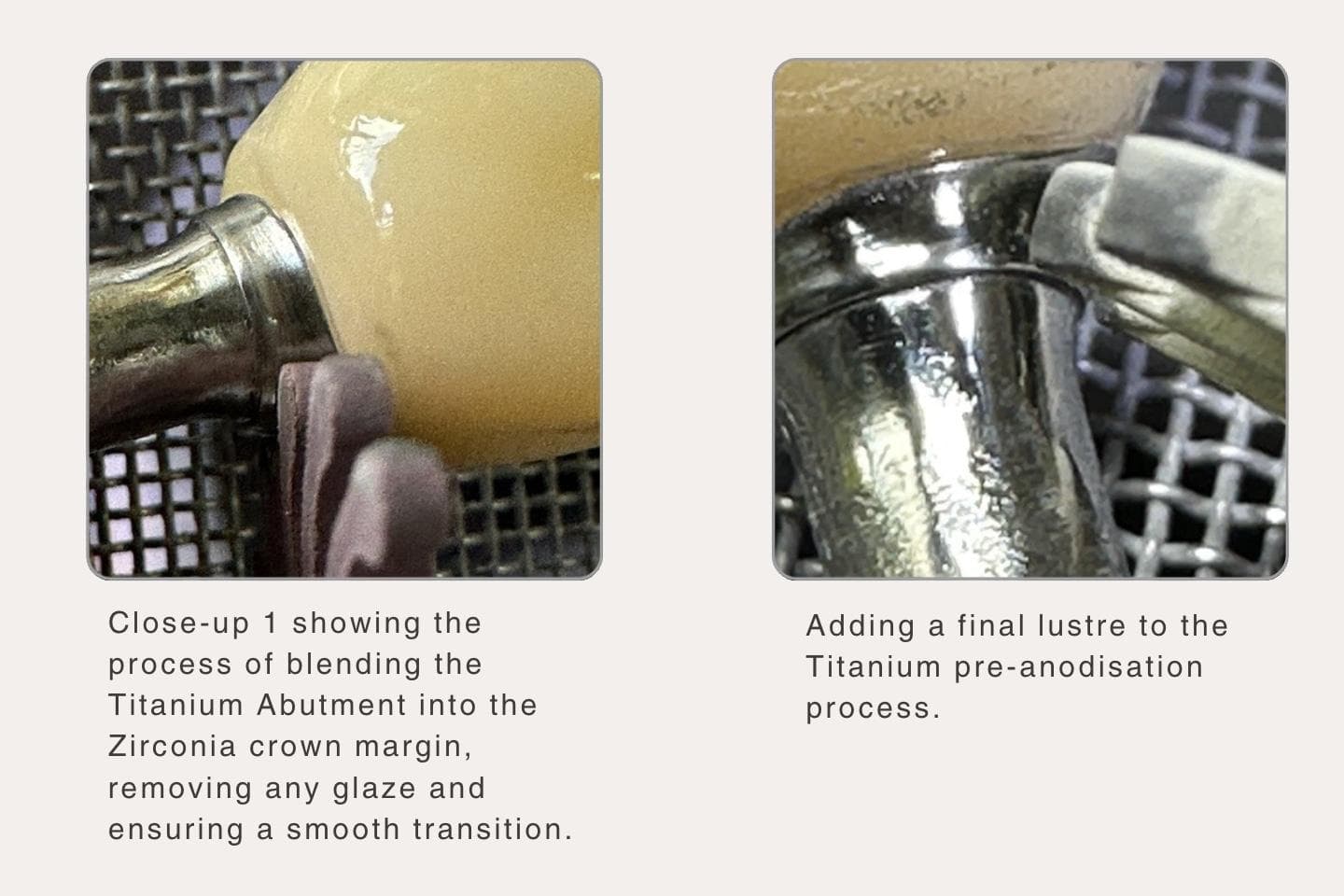
This is achieved through:
- CAD/CAM-milled titanium bases for precision and mechanical integrity.
- Hand-finished zirconia for optimal emergence profile and soft-tissue support.
- Controlled micro-texture at the sub-mucosal zone.
- Strict bonding protocols using MDP-based primers and hybrid abutment cements.
- A seamless zirconia–titanium interface designed to minimise bacterial colonisation.
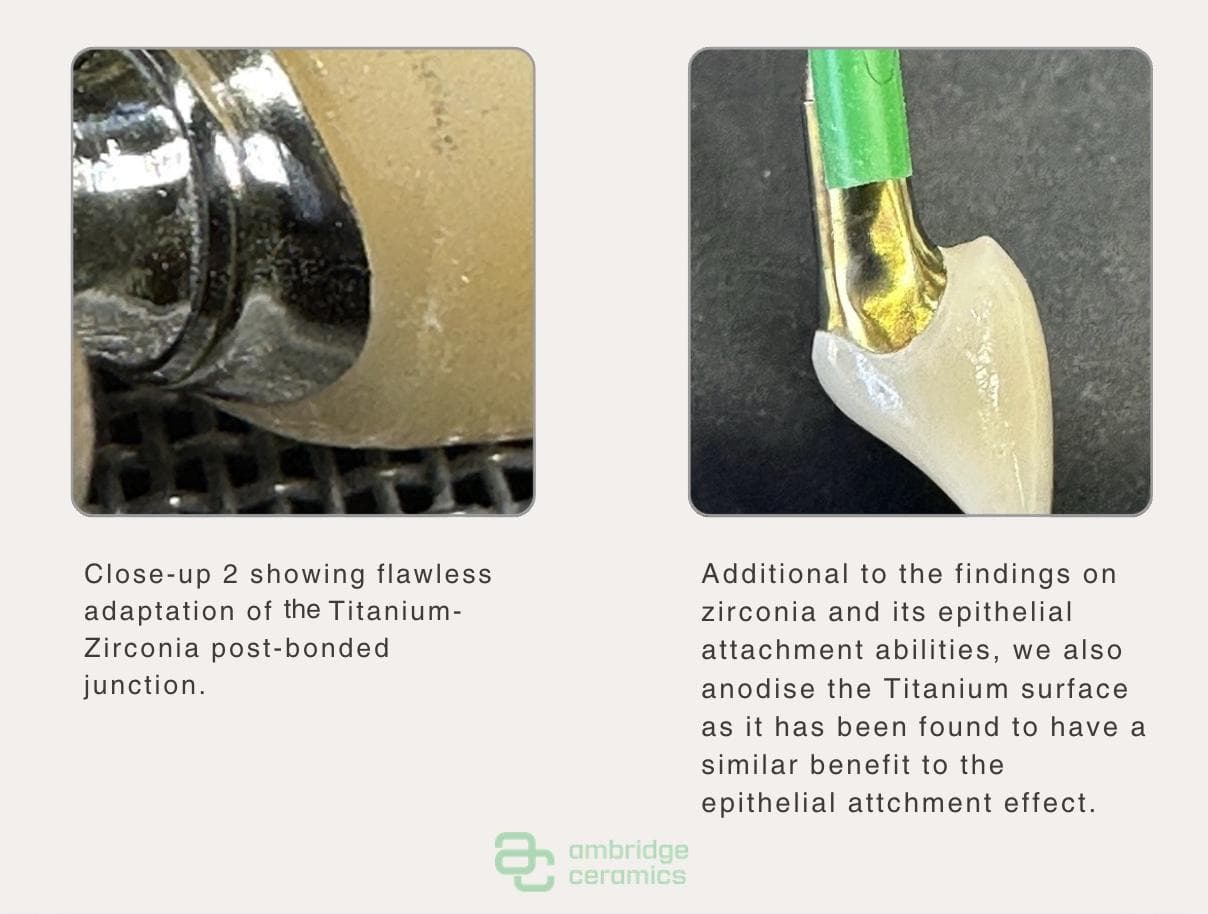
The result is a restoration that is:
- Retrievable.
- Highly aesthetic.
- Soft-tissue friendly.
- Mechanically robust.
- Clinically predictable.
In other words — the screw-mentable crown or bridge done properly.
Closing Summary
Screw-mentable restorations , zirconia bonded to a laboratory-prepared custom titanium abutment , represent the ideal balance of biology, mechanics and aesthetics, but only when engineered with respect for the sub-mucosal environment.
The Ambridge Standard is built on this principle: precision above the tissue, predictability below it.
If you have a complex implant case where the sub-mucosal junction matters — and in implant dentistry, it always matters — get in touch with Ambridge Ceramics on 01765 607347 or info@ambridgeceramics.com. We're glad to talk it through before any work begins.
“Excellence isn’t automated. It’s intentional.”
Talk a Case Through With Us
Have a case where the material choice is in question? Get in touch before work begins , we are always happy to discuss indications, options and anticipated outcomes.
Send a case →Ambridge Ceramics
A multi‑award‑winning UK dental laboratory based in Ripon, North Yorkshire.
Premier House, Kiln Court, College Rd, Ripon HG4 2BP, United Kingdom
- Digital accuracy supported by human expertise.
- Technician‑led decision‑making at every stage.
- Materials chosen for longevity, not convenience.
- Aesthetic outcomes guided by real‑world function.